Back to All Brands
Champion Pet Food Logo

Champion Pet Food

Cat Food

Always First in the production of top quality products in the animal feed industry in Cyprus

Cyprus

1
All
1
Adult
Sort
Score: High → Low
Score: Low → High
Name: A → Z
Name: Z → A
Score: High → Low
Score: Low → High
Name: A → Z
Name: Z → A
Adult Regular
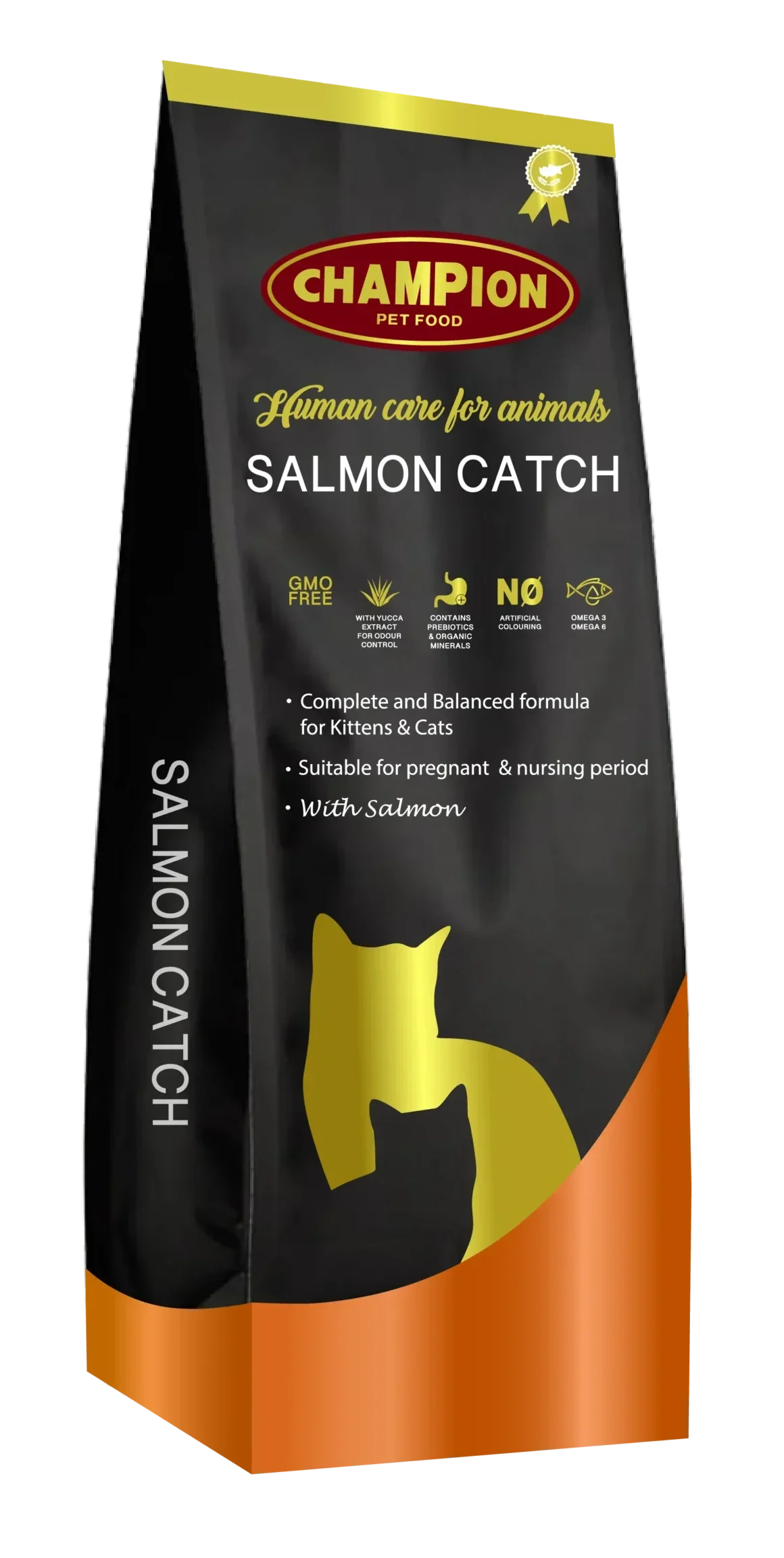
Champion Pet Food: Salmon Catch
65
Champion Pet Food
Salmon Catch
Key nutritional info
Crude Protein
36%
Crude Fat
14%
Crude Fiber
3%
Carbohydrates
26.50%
Metabolizable Energy
3612 kcal/kg
Champion Pet Food: Salmon Catch
Salmon Catch
Champion Pet Food
65
Animal Protein
Fish: Salmon
Adult
Regular
36%
14%
3%
No
[quillforms id="16530" width="100%" min_height="520px" max_height="auto"]

Before you dive in

Please read and confirm the statements below to continue.

By confirming, you agree to our Terms of Use and Privacy Policy.

We could not process your request. Please try again.
Check your inbox and click the link to join the waitlist.
Your cat details were updated
5 seconds
[quillforms id="16530" width="100%" min_height="520px" max_height="auto"]

Found a mistake?
Missing info?

Provide as many details as possible about Champion Pet Food so we can make it better!

Thank you!

How the score is calculated?

The actual calculation of the score is based on sophisticated and advanced algorithm that takes into account multiple parameters.

To simplify the explanation, the calculation is based on three main criteria:

(1) Amount of protein (more is better)

(2) Amount of carbohydrates (less is better)

(3) Quality and source of ingredients.

Based on that 3 main criteria, 9 score calculation rules are used to compare the different foods.

One major assumption is that the closer an ingredient is to the top of the ingredient list, the greater its relative weight and contribution to the food.

In general, cat food is composed of protein, fats, carbohydrates, fibers, vitamins, and minerals.

Protein is the most important component in a cat’s diet, and cats primarily get their protein from animal meat.

Fat is a primary source of energy and essential fatty acids.

Carbohydrates are controversial in a cat’s diet, as cats are obligate carnivores and typically consume very few carbohydrates.

Fibers play an important role in digestion and food absorption, and vitamins and minerals are essential for different organism functions.

Dry matter values are used to compare the amount of nutrients in different cat foods.
This means that moisture is excluded from the equation to provide a more accurate comparison.

Putting all of these and more into a formula results in a product score.

The maximum score a cat food can receive is 100.
Points are added or removed based on the score calculation rules.